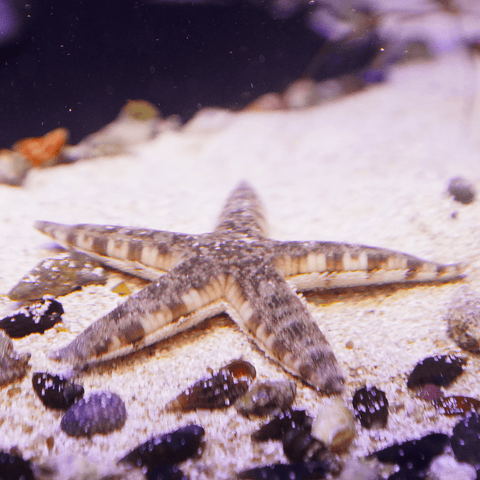
Sand Sifting Starfish
The sand sifting starfish, scientifically known as Archaster typicus, is a benthic echinoderm native to the shallow sandy flats and coastal lagoons of the Indo-Pacific region. Reaching an average diameter of 6 to 8 inches (15 to 20 centimeters), it features a relatively flat body with five long, tapering arms lined along the edges with short, white fringed spines. Its upper surface is typically patterned in mottled shades of tan, beige, grey, and brown, allowing it to blend seamlessly into sand beds. Unlike rock-dwelling sea stars, Archaster typicus spends its life buried just beneath the surface of soft, fine substrate. It uses hundreds of tiny tube feet under its rays to glide effortlessly through sand, constantly tilling and aerating the upper substrate layer to prevent toxic anaerobic gas pockets from forming. As it burrows, it feeds voraciously on micro-organisms, detritus, uneaten fish food, small worms, and micro-fauna dwelling within the sand.
In a home reef aquarium, the sand sifting starfish is a peaceful inhabitant that will not bother corals, anemones, or fish. However, because it relies on a vast supply of benthic infauna for nutrition, it requires a large, mature aquarium with a deep, established sand bed (typically at least 50 to 100 gallons per starfish). In smaller or newly established tanks, it can quickly deplete its natural food supply and slowly starve, often evidenced by the starfish shedding arm tips or coming out onto the glass in search of food.